TinyAI:一个纯Java实现的全栈式轻量级AI框架,提供从底层计算到高级智能体系统的完整AI能力,让Java开发者也能轻松构建AI应用。
原文标题:TinyAI :全栈式轻量级 AI 框架
原文作者:阿里云开发者
冷月清谈:
怜星夜思:
2、TinyAI号称全栈轻量级,但又实现了像GPT、Qwen3这样的大模型和复杂Agent系统。‘轻量级’和大模型的‘重’如何平衡呢?在实际项目中,它能扛得住超大规模模型的部署和训练吗?
3、文章里提到了自进化智能体和RAG系统,听起来很酷。在现实世界中,这种能自我学习、结合外部知识的Agent,部署起来会遇到哪些实际的挑战?比如数据隐私、知识更新的时效性,或者‘进化’失控的风险?
原文内容

一个完全用Java实现的全栈式轻量级AI框架,TinyAI IS ALL YOU NEED。
写在最前面
十一期间,用Qoder体验了一把vibe-coding,喝喝茶动动嘴,将两年前的开源项目()升级了一把:新项目10w行代码80%以上都是agent写的 ,文档几乎100% AI生成的,包括本篇部分内容。两年前在TinyDL-0.01文章的最后说的话:码农命运的齿轮开始反转。现在看来,AI在反转全世界。 https://github.com/Leavesfly/TinyAI 。
前言:为什么要用Java做AI?
在AI领域,Python无疑是当前的主流语言。但对于Java开发者来说,要想深入理解AI算法的本质,或者在企业级Java应用中集成AI能力,往往面临着技术栈割裂的困扰。TinyAI项目正是在这样的背景下应运而生——用纯Java语言,从最基础的数学运算开始,一步步构建起一个功能完整的AI框架。
TinyAI的核心理念:
-
教育友好:清晰的代码结构,详尽的中文注释,让每一行代码都能说话;
-
模块化设计:像搭乐高一样组合AI组件,每个模块职责明确;
-
生产级别:不仅是玩具,更是可以投入实际应用的框架;
-
零外部依赖:核心计算引擎完全自主实现,不依赖任何第三方AI库。
第一章:架构之美——分层设计的智慧
1.1 从"搭积木"的角度理解TinyAI
想象一下,如果要建造一座摩天大楼,我们会怎么做?首先需要坚实的地基,然后是承重结构,再是各种功能模块,最后是外观装饰。TinyAI的架构设计正是遵循了这样的思路:
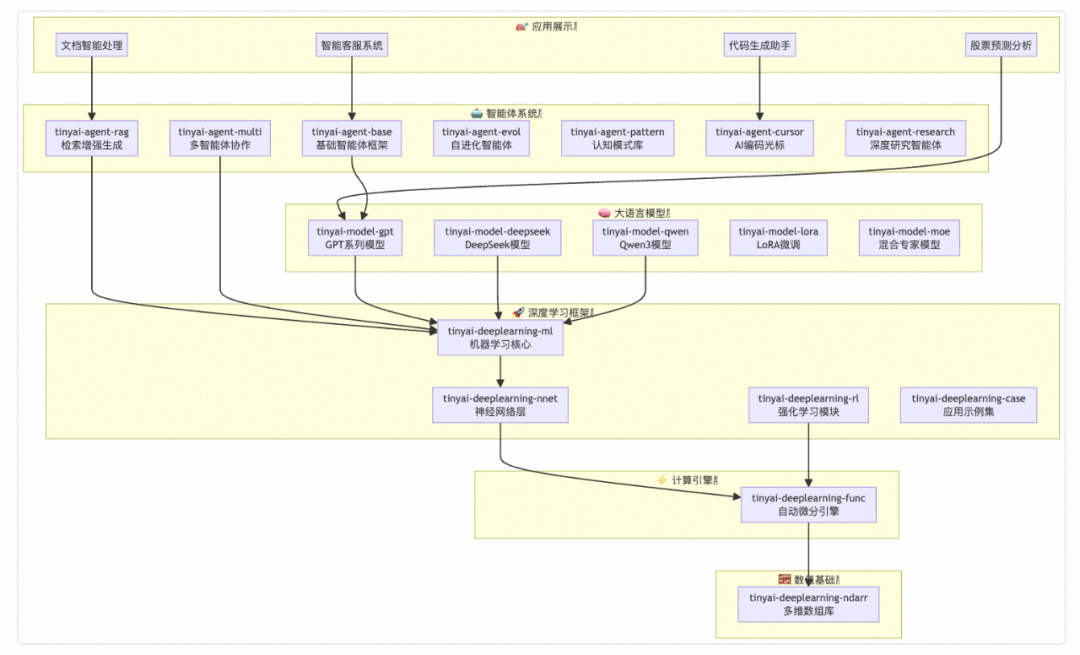
这种分层设计的好处显而易见:
-
底层稳定:数值计算和自动微分引擎为整个系统提供可靠基础;
-
中层灵活:神经网络层提供丰富的组件库,支持各种网络架构;
-
上层开放:智能体和模型层面向应用,支持快速开发;
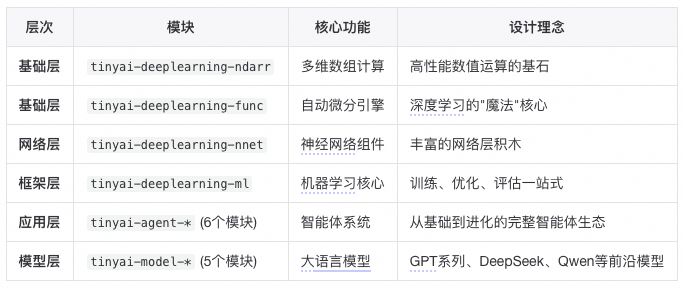
1.2 核心模块:16个精心设计的组件
TinyAI总共包含16个核心模块,每个模块都有其独特的职责:
第二章:从零开始的数学之旅
2.1 多维数组:一切计算的起点
在深度学习中,数据都是以张量(多维数组)的形式存在。TinyAI的NdArray接口设计得非常优雅:
// 创建数组的多种方式
NdArray a = NdArray.of(newfloat[][]{{1, 2}, {3, 4}});     // 从二维数组创建
NdArray b = NdArray.zeros(Shape.of(2, 3));                 // 创建2x3的零矩阵
NdArray c = NdArray.randn(Shape.of(100, 50));              // 创建随机正态分布矩阵
// 丰富的数学运算

NdArray result = a.add(b)           // 矩阵加法

                 .mul(c)            // 对应元素相乘

                 .dot(d)            // 矩阵乘法

                 .sigmoid()         // Sigmoid激活函数

                 .transpose();      // 转置
设计亮点:
-
链式调用:支持流畅的链式操作,代码可读性极佳;
-
形状安全:编译时和运行时的双重形状检查,避免维度错误;
-
内存优化:智能的内存管理,避免不必要的数据拷贝;
2.2 自动微分:深度学习的"魔法"核心
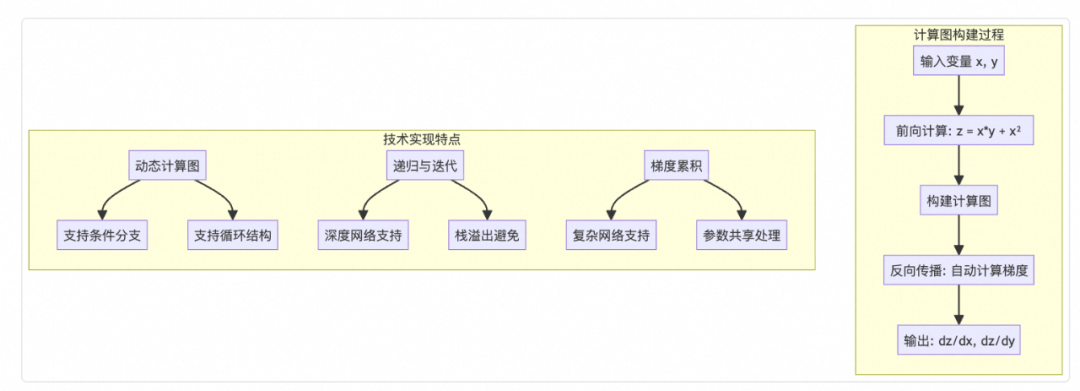
自动微分是深度学习的核心技术。TinyAI的Variable类通过计算图自动追踪操作历史:
// 构建一个简单的计算图 Variable x = new Variable(NdArray.of(2.0f), "x"); Variable y = new Variable(NdArray.of(3.0f), "y");// 正向传播:构建计算图
Variable z = x.mul(y).add(x.squ()); // z = x*y + x²// 反向传播:自动计算梯度
z.backward();
System.out.println("dz/dx = " + x.getGrad().getNumber()); // 输出:dz/dx = 7.0
System.out.println("dz/dy = " + y.getGrad().getNumber()); // 输出:dz/dy = 2.0
技术实现的精妙之处:
-
动态计算图:每次运算都会动态构建计算图,支持条件分支和循环;
-
递归与迭代:提供两种反向传播实现,适应不同场景需求;
-
梯度累积:支持梯度的自动累积,处理复杂的网络结构;
public voidbackward(){
    if (!requireGrad) return;

    // 初始化梯度为1(链式法则的起点)
    if (Objects.isNull(grad)) {
        setGrad(NdArray.ones(this.getValue().getShape()));
    }

    Function creator = this.creator;
    if (creator != null) {
        Variable[] inputs = creator.getInputs();
        List<NdArray> grads = creator.backward(grad);  // 计算输入的梯度

        // 递归计算每个输入变量的梯度
        for (int i = 0; i < inputs.length; i++) {
            Variable input = inputs[i];
            // 梯度累积:支持变量被多次使用的情况
            if (input.getGrad() != null) {
                input.setGrad(input.getGrad().add(grads.get(i)));
            } else {
                input.setGrad(grads.get(i));
            }
            input.backward();  // 递归调用
        }
    }
}
第三章:神经网络的积木世界
3.1 Layer与Block:组合的艺术
TinyAI采用了类似PyTorch的Layer-Block设计模式:
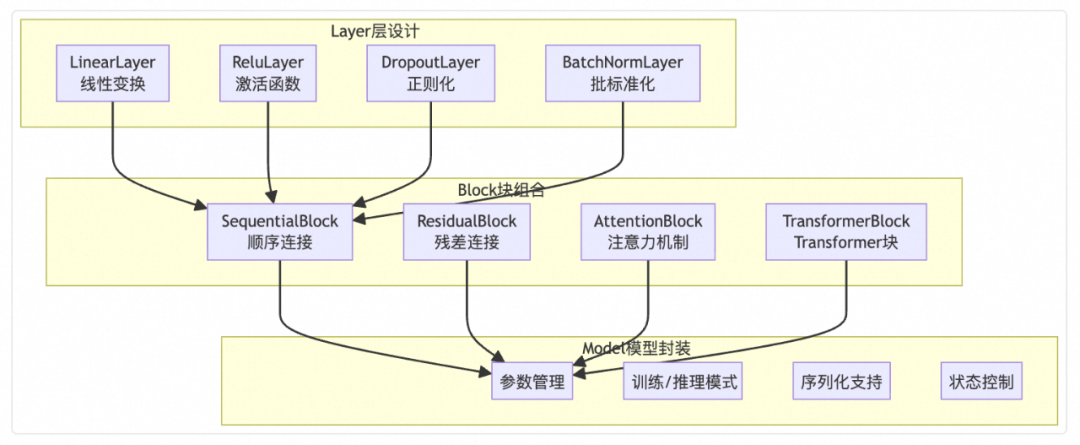
// Layer:最基础的计算单元
public abstract classLayer {
    protected Map<String, Variable> parameters = new HashMap<>();

    public abstract Variable layerForward(Variable... inputs);

    // 参数管理
    protectedvoidaddParameter(String name, NdArray value){
        parameters.put(name, new Variable(value, name));
    }
}
// Block:Layer的组合容器

public abstract classBlock {

    protected List<Layer> layers = new ArrayList<>();


    public abstract Variable blockForward(Variable… inputs);


    // 支持嵌套组合

    publicvoidaddBlock(Block subBlock){

        // 将子Block的Layer添加到当前Block

    }

}
实际应用示例:// 构建一个多层感知机 MlpBlock mlp = new MlpBlock("classifier", 784, newint[]{128, 64, 10});
// 构建一个完整的神经网络
SequentialBlock network = new SequentialBlock(“mnist_net”);
network.addLayer(new FlattenLayer(“flatten”)) // 展平层
.addLayer(new LinearLayer(“fc1”, 784, 128)) // 全连接层1
.addLayer(new ReluLayer(“relu1”)) // ReLU激活
.addLayer(new LinearLayer(“fc2”, 128, 64)) // 全连接层2
.addLayer(new ReluLayer(“relu2”)) // ReLU激活
.addLayer(new LinearLayer(“fc3”, 64, 10)) // 输出层
.addLayer(new SoftmaxLayer(“softmax”)); // Softmax
3.2 现代网络架构的实现
TinyAI不仅支持基础的神经网络,还实现了现代的先进架构:
Transformer架构:
public class TransformerBlockextendsBlock {
    private MultiHeadAttentionLayer attention;
    private FeedForwardLayer feedForward;
    private LayerNormalizationLayer norm1, norm2;

    @Override
    public Variable blockForward(Variable... inputs){
        Variable input = inputs[0];

        // Self-Attention + 残差连接
        Variable attnOut = norm1.layerForward(input);
        attnOut = attention.layerForward(attnOut, attnOut, attnOut);
        Variable residual1 = input.add(attnOut);

        // Feed-Forward + 残差连接
        Variable ffOut = norm2.layerForward(residual1);
        ffOut = feedForward.layerForward(ffOut);
        return residual1.add(ffOut);
    }
}
LSTM循环网络:
public class LstmLayerextendsLayer {
    @Override
    public Variable layerForward(Variable... inputs){
        Variable x = inputs[0];
        Variable h = inputs[1];  // 隐藏状态
        Variable c = inputs[2];  // 细胞状态

        // 遗忘门
        Variable f = sigmoid(linear(concat(x, h), Wf).add(bf));
        // 输入门
        Variable i = sigmoid(linear(concat(x, h), Wi).add(bi));
        // 候选值
        Variable g = tanh(linear(concat(x, h), Wg).add(bg));
        // 输出门
        Variable o = sigmoid(linear(concat(x, h), Wo).add(bo));

        // 更新细胞状态和隐藏状态
        Variable newC = f.mul(c).add(i.mul(g));
        Variable newH = o.mul(tanh(newC));

        return newH;
    }
}
第四章:训练的艺术——从数据到智慧

4.1 Trainer:训练过程的指挥家
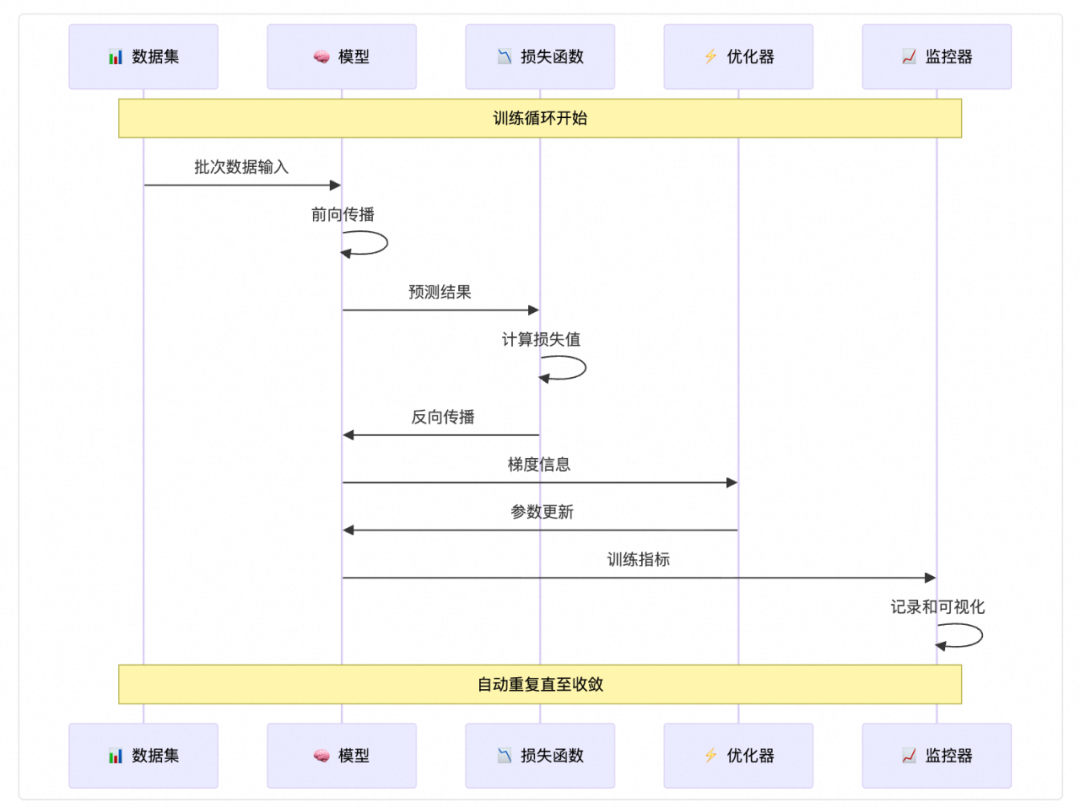
TinyAI的Trainer类封装了完整的训练流程,让复杂的训练过程变得简单:
// 创建数据集 DataSet trainData = new ArrayDataset(trainX, trainY);// 构建模型
Model model = new Model(“mnist_classifier”, mlpBlock);// 配置训练器(支持并行训练)
Trainer trainer = new Trainer(
epochs: 100, // 训练轮数
monitor: new TrainingMonitor(), // 训练监控器
evaluator: new AccuracyEvaluator(), // 评估器
useParallel: true, // 启用并行训练
threadCount: 4 // 线程数
);// 初始化训练器
trainer.init(trainData, model,
new MeanSquaredErrorLoss(), // 损失函数
new SgdOptimizer(0.01f)); // 优化器
// 开始训练(一键式训练)
trainer.train(showTrainingCurve: true);
训练过程的核心流程:
public voidtrain(boolean showCurve){
    for (int epoch = 0; epoch < epochs; epoch++) {
        // 1. 设置模型为训练模式
        model.setTraining(true);

        // 2. 批次训练
        for (DataBatch batch : dataSet.getBatches()) {
            // 2.1 前向传播
            Variable prediction = model.forward(batch.getInputs());

            // 2.2 计算损失
            Variable loss = lossFunction.forward(prediction, batch.getTargets());

            // 2.3 清空梯度
            model.clearGradients();

            // 2.4 反向传播
            loss.backward();

            // 2.5 参数更新
            optimizer.step(model.getParameters());

            // 2.6 记录训练信息
            monitor.recordTrainingStep(loss.getValue().getNumber());
        }

        // 3. 模型评估
        if (epoch % 10 == 0) {
            float accuracy = evaluator.evaluate(model, validationData);
            monitor.recordEpoch(epoch, accuracy);
        }
    }

    // 4. 可视化训练曲线
    if (showCurve) {
        monitor.plotTrainingCurve();
    }
}
4.2 并行训练:榨干多核性能
TinyAI支持多线程并行训练,充分利用现代CPU的多核优势:
public class ParallelTrainer {
    private ExecutorService executorService;
    private int threadCount;

    public voidparallelTrainBatch(List<DataBatch> batches){
        // 创建线程池
        executorService = Executors.newFixedThreadPool(threadCount);

        // 将批次分配给不同线程
        List<Future<TrainingResult>> futures = new ArrayList<>();
        for (DataBatch batch : batches) {
            Future<TrainingResult> future = executorService.submit(() -> {
                // 每个线程独立训练一个批次
                return trainSingleBatch(batch);
            });
            futures.add(future);
        }

        // 收集训练结果并聚合梯度
        List<Map<String, NdArray>> gradients = new ArrayList<>();
        for (Future<TrainingResult> future : futures) {
            TrainingResult result = future.get();
            gradients.add(result.getGradients());
        }

        // 梯度聚合和参数更新
        Map<String, NdArray> aggregatedGrads = aggregateGradients(gradients);
        optimizer.step(aggregatedGrads);
    }
}
第五章:大语言模型的实现——从GPT到现代架构
5.1 GPT系列:Transformer的演进之路
TinyAI完整实现了GPT-1到GPT-3的架构演进,让我们能够清晰地看到大语言模型的发展脉络:
GPT-1:Transformer的初次应用
public class GPT1ModelextendsModel {
    private TokenEmbedding tokenEmbedding;
    private PositionalEncoding posEncoding;
    private List<TransformerBlock> transformerBlocks;
    private LayerNormalizationLayer finalNorm;
    private LinearLayer outputProjection;

    @Override
    public Variable forward(Variable... inputs){
        Variable tokens = inputs[0];

        // 1. Token嵌入 + 位置编码
        Variable embedded = tokenEmbedding.forward(tokens);
        Variable positioned = posEncoding.forward(embedded);

        // 2. 多层Transformer块
        Variable hidden = positioned;
        for (TransformerBlock block : transformerBlocks) {
            hidden = block.blockForward(hidden);
        }

        // 3. 最终归一化和输出投影
        hidden = finalNorm.layerForward(hidden);
        return outputProjection.layerForward(hidden);
    }
}
GPT-2:更大的模型,更强的能力
public class GPT2ModelextendsGPT1Model {
    // GPT-2相对于GPT-1的主要改进:
    // 1. 更大的模型参数(1.5B)
    // 2. 更多的注意力头和层数
    // 3. 改进的初始化策略

    public static GPT2Model createMediumModel(){
        GPT2Config config = GPT2Config.builder()
            .vocabSize(50257)
            .hiddenSize(1024)
            .numLayers(24)
            .numHeads(16)
            .maxPositionEmbeddings(1024)
            .build();

        returnnew GPT2Model(config);
    }
}
GPT-3:稀疏注意力的探索
public class GPT3ModelextendsGPT2Model {
    @Override
    protected MultiHeadAttentionLayer createAttentionLayer(GPT3Config config){
        // GPT-3引入稀疏注意力机制
        returnnew SparseMultiHeadAttentionLayer(
            config.getHiddenSize(),
            config.getNumHeads(),
            config.getAttentionPatterns()  // 稀疏注意力模式
        );
    }
}
5.2 现代架构:Qwen3的先进设计
TinyAI还实现了更现代的Qwen3模型,集成了最新的技术进展:
public class Qwen3ModelextendsModel {
    @Override
    public Variable forward(Variable... inputs){
        Variable tokens = inputs[0];

        // 1. 嵌入层
        Variable embedded = tokenEmbedding.forward(tokens);

        // 2. 多个Decoder块(集成了现代技术)
        Variable hidden = embedded;
        for (Qwen3DecoderBlock block : decoderBlocks) {
            hidden = block.blockForward(hidden);
        }

        // 3. RMS归一化(替代LayerNorm)
        hidden = rmsNorm.layerForward(hidden);

        return outputProjection.layerForward(hidden);
    }
}
public class Qwen3DecoderBlockextendsBlock {

    private Qwen3AttentionBlock attention;    // 集成GQA和RoPE

    private Qwen3MLPBlock mlp;               // 集成SwiGLU激活

    private RMSNormLayer preAttnNorm;

    private RMSNormLayer preMlpNorm;


    @Override

    public Variable blockForward(Variable… inputs){

        Variable input = inputs[0];


        // 预归一化 + 注意力 + 残差连接

        Variable normed1 = preAttnNorm.layerForward(input);

        Variable attnOut = attention.blockForward(normed1);

        Variable residual1 = input.add(attnOut);


        // 预归一化 + MLP + 残差连接

        Variable normed2 = preMlpNorm.layerForward(residual1);

        Variable mlpOut = mlp.blockForward(normed2);

        return residual1.add(mlpOut);

    }

}
关键技术实现:
public class RotaryPositionalEmbeddingLayerextendsLayer {
    @Override
    public Variable layerForward(Variable... inputs){
        Variable x = inputs[0];
        int seqLen = x.getValue().getShape().get(1);
        int dim = x.getValue().getShape().get(2);

        // 计算旋转角度
        NdArray freqs = computeFrequencies(dim, seqLen);

        // 应用旋转变换
        return applyRotaryEmbedding(x, freqs);
    }
}
public class GroupedQueryAttentionextendsLayer {
    private int numHeads;
    private int numKeyValueHeads;  // KV头数少于Q头数

    @Override
    public Variable layerForward(Variable... inputs){
        // Q、K、V投影,但K和V共享参数组
        Variable q = queryProjection.layerForward(inputs[0]);
        Variable k = keyProjection.layerForward(inputs[0]);
        Variable v = valueProjection.layerForward(inputs[0]);

        // 重复K和V以匹配Q的头数
        k = repeatKVHeads(k);
        v = repeatKVHeads(v);

        return computeAttention(q, k, v);
    }
}
第六章:智能体系统——赋予AI思考的能力

6.1 智能体的层次化设计
TinyAI的智能体系统从最基础的Agent开始,逐步发展到具备自我进化能力的高级智能体:
// 基础智能体:具备基本的感知和行动能力
public abstract classBaseAgent {
    protected String name;
    protected String systemPrompt;
    protected Memory memory;
    protected ToolRegistry toolRegistry;

    public abstract AgentResponse processMessage(String message);

    protected Object performTask(AgentTask task) throws Exception {
        // 任务执行的基本流程
        return null;
    }
}
// 高级智能体:具备学习和推理能力

public class AdvancedAgentextendsBaseAgent {

    private KnowledgeBase knowledgeBase;

    private ReasoningEngine reasoningEngine;


    @Override

    public AgentResponse processMessage(String message){

        // 1. 理解用户意图

        Intent intent = intentRecognition.analyze(message);


        // 2. 检索相关知识

        List<Knowledge> relevantKnowledge = knowledgeBase.retrieve(intent);


        // 3. 推理和生成回答

        String response = reasoningEngine.generateResponse(intent, relevantKnowledge);


        // 4. 更新记忆

        memory.store(new Conversation(message, response));


        returnnew AgentResponse(response);

    }

}
6.2 自进化智能体:具备学习能力的AI
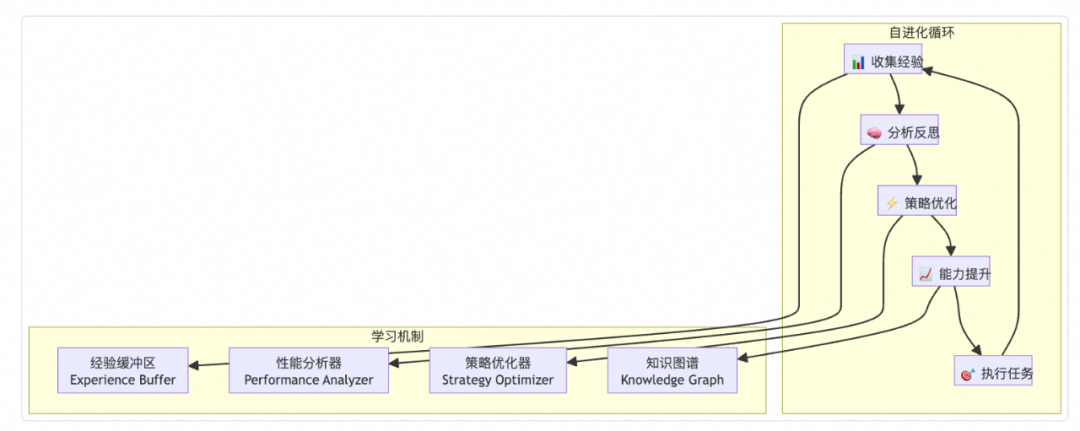
自进化智能体是TinyAI的一个重要创新,它能够从经验中学习并优化自己的行为:
public class SelfEvolvingAgentextendsAdvancedAgent {
    private ExperienceBuffer experienceBuffer;
    private StrategyOptimizer strategyOptimizer;
    private KnowledgeGraphBuilder knowledgeGraphBuilder;

    @Override
    public TaskResult processTask(String taskName, TaskContext context){
        // 1. 记录任务开始状态
        TaskSnapshot snapshot = captureTaskSnapshot(taskName, context);

        // 2. 执行任务
        TaskResult result = super.processTask(taskName, context);

        // 3. 记录经验
        Experience experience = new Experience(snapshot, result);
        experienceBuffer.add(experience);

        // 4. 触发学习(如果需要)
        if (shouldTriggerLearning()) {
            selfEvolve();
        }

        return result;
    }

    public voidselfEvolve(){
        // 1. 经验分析
        List<Experience> recentExperiences = experienceBuffer.getRecentExperiences();
        PerformanceAnalysis analysis = analyzePerformance(recentExperiences);

        // 2. 策略优化
        if (analysis.hasImprovementOpportunity()) {
            Strategy newStrategy = strategyOptimizer.optimize(analysis);
            updateStrategy(newStrategy);
        }

        // 3. 知识图谱更新
        List<KnowledgeNode> newNodes = extractKnowledgeFromExperiences(recentExperiences);
        knowledgeGraphBuilder.updateGraph(newNodes);

        // 4. 能力提升
        enhanceCapabilities(analysis);
    }
}
6.3 多智能体协作:集体智慧的体现
TinyAI支持多个智能体之间的协作,实现复杂任务的分工合作:
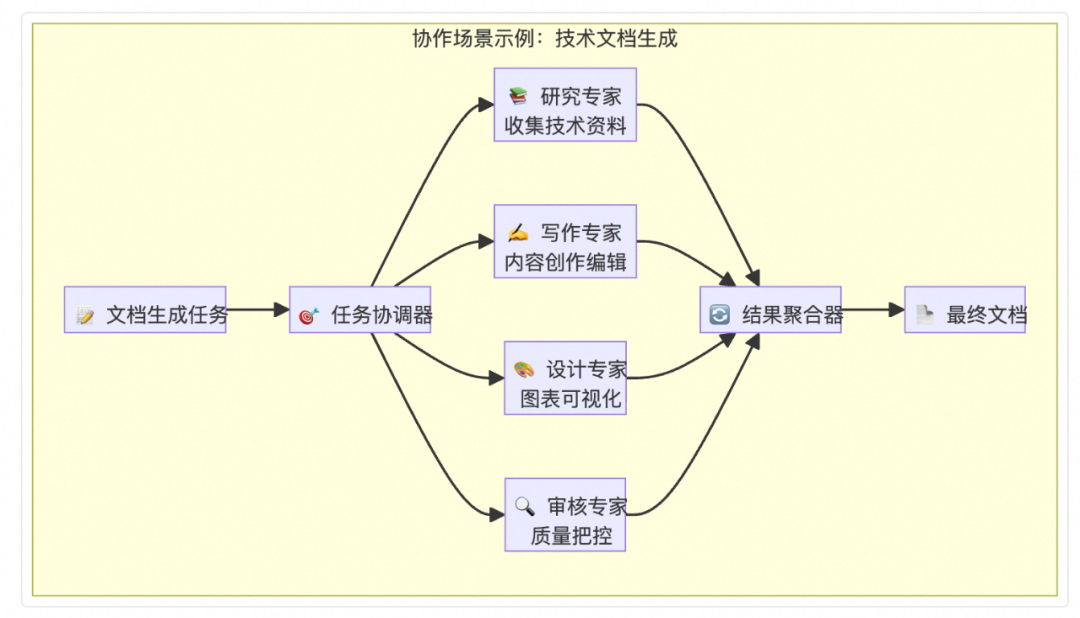
6.4 RAG系统:知识检索增强生成
TinyAI实现了完整的RAG(Retrieval-Augmented Generation)系统:
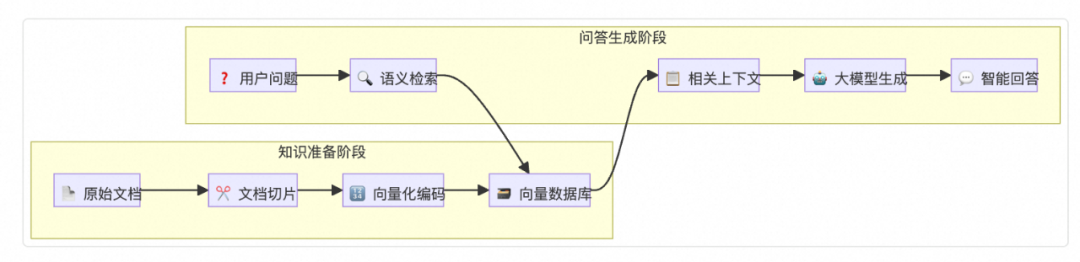
public class RAGSystem {
    private VectorDatabase vectorDB;
    private TextEncoder textEncoder;
    private DocumentProcessor documentProcessor;

    public String generateAnswer(String question, List<Document> documents){
        // 1. 文档预处理和向量化
        for (Document doc : documents) {
            List<TextChunk> chunks = documentProcessor.chunkDocument(doc);
            for (TextChunk chunk : chunks) {
                NdArray embedding = textEncoder.encode(chunk.getText());
                vectorDB.store(chunk.getId(), embedding, chunk);
            }
        }

        // 2. 问题向量化
        NdArray questionEmbedding = textEncoder.encode(question);

        // 3. 相似度检索
        List<RetrievalResult> relevantChunks = vectorDB.similaritySearch(
            questionEmbedding, topK: 5);

        // 4. 上下文构建
        String context = buildContext(relevantChunks);

        // 5. 生成回答
        String prompt = String.format(
            "基于以下上下文回答问题:\n上下文:%s\n问题:%s\n回答:",
            context, question);

        return textGenerator.generate(prompt);
    }
}
第七章:设计理念与技术哲学
7.1 面向对象设计的精髓
TinyAI的设计充分体现了面向对象编程的精髓:
1. 单一职责原则
// 每个类都有明确的单一职责
public class LinearLayerextendsLayer {        // 只负责线性变换
public class ReluLayerextendsLayer {          // 只负责ReLU激活
public class SoftmaxLayerextendsLayer {       // 只负责Softmax计算
2. 开闭原则
// 对扩展开放,对修改封闭
public abstract classLayer {
    // 基础功能稳定不变
    public final Variable forward(Variable... inputs){
        return layerForward(inputs);  // 委托给子类实现
    }

    // 扩展点:子类可以实现自己的计算逻辑
    protected abstract Variable layerForward(Variable... inputs);
}
3. 依赖倒置原则
// 高层模块不依赖低层模块,都依赖抽象
public class Trainer {
    private LossFunction lossFunction;      // 依赖抽象接口
    private Optimizer optimizer;            // 依赖抽象接口
    private Evaluator evaluator;            // 依赖抽象接口

    // 通过依赖注入获得具体实现
    public voidinit(DataSet dataSet, Model model,
                    LossFunction loss, Optimizer opt) {
        this.lossFunction = loss;
        this.optimizer = opt;
    }
}
7.2 设计模式的巧妙运用
1. 组合模式:构建复杂网络
public class SequentialBlockextendsBlock {
    private List<Layer> layers = new ArrayList<>();

    public SequentialBlock addLayer(Layer layer){
        layers.add(layer);
        returnthis;  // 支持链式调用
    }

    @Override
    public Variable blockForward(Variable... inputs){
        Variable output = inputs[0];
        for (Layer layer : layers) {
            output = layer.layerForward(output);  // 逐层前向传播
        }
        return output;
    }
}
2. 策略模式:灵活的算法选择
// 优化器策略 public interface Optimizer { voidstep(Map<String, Variable> parameters); }public class SgdOptimizerimplementsOptimizer {
publicvoidstep(Map<String, Variable> parameters){
// SGD优化策略
}
}
public class AdamOptimizerimplementsOptimizer {
publicvoidstep(Map<String, Variable> parameters){
// Adam优化策略
}
}
3. 观察者模式:训练过程监控
public class TrainingMonitor {
    private List<TrainingListener> listeners = new ArrayList<>();

    public voidaddListener(TrainingListener listener){
        listeners.add(listener);
    }

    public voidnotifyEpochComplete(int epoch, float loss, float accuracy){
        for (TrainingListener listener : listeners) {
            listener.onEpochComplete(epoch, loss, accuracy);
        }
    }
}
7.3 内存管理与性能优化
1. 智能的内存管理
public class NdArrayCpuimplementsNdArray {
    private float[] data;
    private Shape shape;
    private boolean isView = false;  // 标记是否为视图(共享数据)

    // 避免不必要的数据拷贝
    public NdArray reshape(Shape newShape){
        if (newShape.size() != shape.size()) {
            throw new IllegalArgumentException("Shape size mismatch");
        }

        NdArrayCpu result = new NdArrayCpu();
        result.data = this.data;      // 共享底层数据
        result.shape = newShape;
        result.isView = true;         // 标记为视图
        return result;
    }
}
2. 计算图的智能剪枝
public class Variable {
    publicvoidunChainBackward(){
        // 切断计算图,释放不需要的引用
        Function creatorFunc = creator;
        if (creatorFunc != null) {
            Variable[] xs = creatorFunc.getInputs();
            unChain();  // 清除当前节点的creator引用
            for (Variable x : xs) {
                x.unChainBackward();  // 递归切断
            }
        }
    }
}
7.4 错误处理与调试友好
1. 丰富的错误信息
public NdArray dot(NdArray other){
    if (!isMatrix() || !other.isMatrix()) {
        thrownew IllegalArgumentException(
            String.format("Matrix multiplication requires 2D arrays. " +
                         "Got shapes: %s and %s",
                         this.getShape(), other.getShape()));
    }

    if (this.getShape().get(1) != other.getShape().get(0)) {
        thrownew IllegalArgumentException(
            String.format("Matrix dimensions mismatch for multiplication: " +
                         "(%d x %d) * (%d x %d)",
                         this.getShape().get(0), this.getShape().get(1),
                         other.getShape().get(0), other.getShape().get(1)));
    }

    return dotImpl(other);
}
2. 调试信息的保留
public class Variable {
    private String name;  // 变量名称,便于调试

    @Override
    public String toString(){
        return String.format("Variable(name='%s', shape=%s, requireGrad=%s)",
                           name, value.getShape(), requireGrad);
    }
}
第八章:实际应用案例
8.1 MNIST手写数字识别
问题场景:经典的计算机视觉入门任务

训练效果可视化:
📈 训练进度展示
Epoch 1/50:  Loss=2.156, Accuracy=23.4% ████▒▒▒▒▒▒
Epoch 10/50: Loss=0.845, Accuracy=75.6% ████████▒▒
Epoch 25/50: Loss=0.234, Accuracy=89.3% █████████▒
Epoch 50/50: Loss=0.089, Accuracy=97.3% ██████████
 最终测试准确率: 97.3%
8.2 智能客服系统
public class IntelligentCustomerService {
    public staticvoidmain(String[] args){
        // 1. 创建RAG系统
        RAGSystem ragSystem = new RAGSystem();

        // 2. 加载企业知识库
        List<Document> knowledgeBase = Arrays.asList(
            new Document("产品说明书", loadProductDocs()),
            new Document("常见问题", loadFAQs()),
            new Document("服务流程", loadServiceProcesses())
        );

        // 3. 创建智能客服Agent
        AdvancedAgent customerServiceAgent = new AdvancedAgent(
            "智能客服小助手",
            "你是一个专业的客服助手,能够基于企业知识库回答用户问题"
        );

        // 4. 集成RAG能力
        customerServiceAgent.addTool("knowledge_search",
            (query) -> ragSystem.generateAnswer(query, knowledgeBase));

        // 5. 处理客户咨询
        Scanner scanner = new Scanner(System.in);
        System.out.println("智能客服系统启动,请输入您的问题:");

        while (true) {
            String userInput = scanner.nextLine();
            if ("退出".equals(userInput)) break;

            AgentResponse response = customerServiceAgent.processMessage(userInput);
            System.out.println("客服助手:" + response.getMessage());
        }
    }
}
8.3 股票预测系统
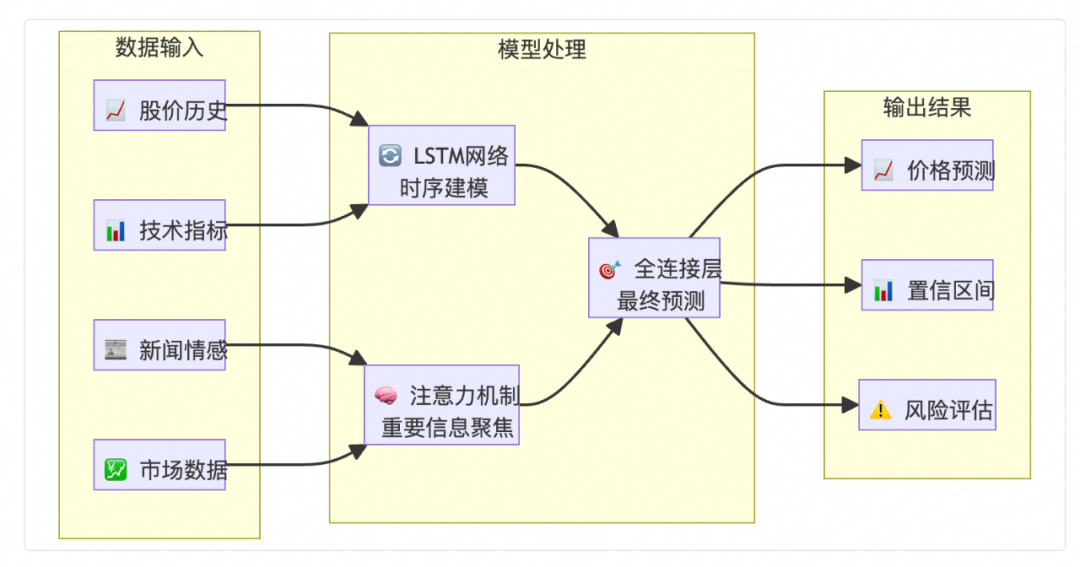
public class StockPredictionSystem {
    public staticvoidmain(String[] args){
        // 1. 构建LSTM网络
        SequentialBlock lstm = new SequentialBlock("stock_predictor");
        lstm.addLayer(new LstmLayer("lstm1", 10, 50))      // 输入10个特征,隐藏50维
            .addLayer(new DropoutLayer("dropout1", 0.2f))
            .addLayer(new LstmLayer("lstm2", 50, 25))       // 第二层LSTM
            .addLayer(new DropoutLayer("dropout2", 0.2f))
            .addLayer(new LinearLayer("output", 25, 1))     // 输出层预测价格
            .addLayer(new LinearLayer("final", 1, 1));      // 最终输出

        Model model = new Model("stock_predictor", lstm);

        // 2. 准备时间序列数据
        TimeSeriesDataSet stockData = new TimeSeriesDataSet(
            loadStockData("AAPL", "2020-01-01", "2023-12-31"),
            sequenceLength: 30,  // 使用30天的历史数据预测下一天
            features: Arrays.asList("open", "high", "low", "close", "volume",
                                   "ma5", "ma20", "rsi", "macd", "volume_ma")
        );

        // 3. 训练模型
        Trainer trainer = new Trainer(100, new TrainingMonitor(),
                                    new MSEEvaluator());
        trainer.init(stockData, model,
                    new MeanSquaredErrorLoss(),
                    new AdamOptimizer(0.001f));
        trainer.train(true);

        // 4. 预测未来价格
        Variable prediction = model.forward(stockData.getLastSequence());
        float predictedPrice = prediction.getValue().getNumber().floatValue();

        System.out.printf("预测明日股价: $%.2f\n", predictedPrice);
    }
}
第九章:性能优化与最佳实践
9.1 性能优化策略
1. 内存池技术
public class NdArrayPool {
    privatestaticfinal Map<Shape, Queue<NdArrayCpu>> pool = new ConcurrentHashMap<>();

    public static NdArrayCpu acquire(Shape shape){
        Queue<NdArrayCpu> queue = pool.computeIfAbsent(shape,
            k -> new ConcurrentLinkedQueue<>());

        NdArrayCpu array = queue.poll();
        if (array == null) {
            array = new NdArrayCpu(shape);
        }
        returnarray;
    }

    public staticvoidrelease(NdArrayCpu array){
        // 清零数据并返回池中
        Arrays.fill(array.getData(), 0.0f);
        Queue<NdArrayCpu> queue = pool.get(array.getShape());
        if (queue != null) {
            queue.offer(array);
        }
    }
}
2. 批量计算优化
public class BatchProcessor {
    public static NdArray batchMatMul(List<NdArray> matrices1,
                                     List<NdArray> matrices2) {
        // 将多个矩阵乘法合并为一次批量操作
        NdArray batch1 = NdArray.stack(matrices1, axis: 0);
        NdArray batch2 = NdArray.stack(matrices2, axis: 0);

        return batch1.batchDot(batch2);  // 批量矩阵乘法,充分利用并行性
    }
}
9.2 最佳实践指南
1. 模型设计最佳实践
// ✅ 好的做法:层次清晰,易于理解和调试 public class GoodModelDesign { public Model createModel(){ // 特征提取器 Block featureExtractor = new SequentialBlock("feature_extractor") .addLayer(new LinearLayer("fe1", 784, 512)) .addLayer(new BatchNormalizationLayer("bn1", 512)) .addLayer(new ReluLayer("relu1")) .addLayer(new DropoutLayer("dropout1", 0.3f)); // 分类器 Block classifier = new SequentialBlock("classifier") .addLayer(new LinearLayer("cls1", 512, 256)) .addLayer(new ReluLayer("relu2")) .addLayer(new LinearLayer("cls2", 256, 10)) .addLayer(new SoftmaxLayer("softmax")); // 组合模型 SequentialBlock fullModel = new SequentialBlock("full_model") .addBlock(featureExtractor) .addBlock(classifier); returnnew Model("mnist_advanced", fullModel); } }
//不好的做法:所有层混在一起,难以理解和修改
public class BadModelDesign {
public Model createModel(){
SequentialBlock model = new SequentialBlock(“model”);
model.addLayer(new LinearLayer(“l1”, 784, 512))
.addLayer(new BatchNormalizationLayer(“b1”, 512))
.addLayer(new ReluLayer(“r1”))
.addLayer(new DropoutLayer(“d1”, 0.3f))
.addLayer(new LinearLayer(“l2”, 512, 256))
.addLayer(new ReluLayer(“r2”))
.addLayer(new LinearLayer(“l3”, 256, 10))
.addLayer(new SoftmaxLayer(“s1”));
returnnew Model(“mnist_bad”, model);
}
}
2. 训练过程最佳实践
public class TrainingBestPractices {
    public voidtrainModel(){
        // ✅ 使用学习率调度
        LearningRateScheduler scheduler = new CosineAnnealingScheduler(
            initialLR: 0.01f, minLR: 0.001f, maxEpochs: 100);

        // ✅ 使用早停机制
        EarlyStopping earlyStopping = new EarlyStopping(
            patience: 10, minDelta: 0.001f);

        // ✅ 使用检查点保存
        ModelCheckpoint checkpoint = new ModelCheckpoint(
            "best_model.json", saveOnlyBest: true);

        Trainer trainer = new Trainer(100, new TrainingMonitor(),
                                    new AccuracyEvaluator());
        trainer.addCallback(scheduler)
               .addCallback(earlyStopping)
               .addCallback(checkpoint);

        trainer.train(true);
    }
}
第十章:未来展望与社区建设
10.1 技术发展路线图
TinyAI的未来发展将围绕以下几个方向:
1. 硬件加速支持
// 计划支持GPU加速
public interface NdArray {
    NdArray toGPU();         // 数据迁移到GPU
    NdArray toCPU();         // 数据迁移回CPU
    DeviceType getDevice();  // 获取当前设备类型
}
// 支持分布式训练

public class DistributedTrainerextendsTrainer {

    private List<TrainingNode> nodes;


    public voiddistributedTrain(){

        // AllReduce梯度聚合

        // 参数同步

        // 负载均衡

    }

}
2. 模型量化与压缩
public class ModelQuantization {
    public Model quantizeToInt8(Model model){
        // 将Float32模型量化为Int8
        // 减少模型大小和推理时间
    }

    public Model pruneModel(Model model, float sparsity){
        // 模型剪枝,移除不重要的连接
        // 保持精度的同时减少计算量
    }
}
3. 更丰富的模型生态
// 计算机视觉模型
public class VisionModels {
    public static Model createResNet50(){ /* ... */ }
    public static Model createViT(){ /* ... */ }
    public static Model createYOLOv8(){ /* ... */ }
}
// 自然语言处理模型

public classNLPModels {

    public static Model createBERT(){ /* … / }

    public static Model createT5(){ / … / }

    public static Model createLLaMA(){ / … */ }

}
10.2 社区生态建设
1. 开发者友好的工具链
# TinyAI CLI工具
tinyai create-project my-ai-app --template=chatbot
tinyai train --config=training.yaml --data=dataset/
tinyai deploy --model=best_model.json --endpoint=/api/predict
tinyai benchmark --model=my_model.json --dataset=test_data/
2. 丰富的示例和教程
-
从零开始的深度学习课程
-
实战项目案例集合
-
最佳实践指南
-
性能优化技巧
3. 插件化架构
// 支持第三方插件
public interface TinyAIPlugin {
    String getName();
    String getVersion();
    voidinitialize(TinyAIContext context);
    voidshutdown();
}
// 插件管理器

public class PluginManager {

    publicvoidloadPlugin(String pluginPath){ /* … / }

    publicvoidunloadPlugin(String pluginName){ / … / }

    public List<TinyAIPlugin> getLoadedPlugins(){ / … */ }

}
10.3 教育与人才培养
TinyAI不仅是一个技术框架,更是一个教育平台:
1. 交互式学习环境
public class InteractiveLearning {
    public voiddemonstrateBackpropagation(){
        // 可视化反向传播过程
        Variable x = new Variable(NdArray.of(2.0f), "输入x");
        Variable w = new Variable(NdArray.of(3.0f), "权重w");
        Variable y = x.mul(w).add(x.squ());  // y = w*x + x²

        // 显示计算图
        ComputationGraphVisualizer.display(y);

        // 逐步展示反向传播
        y.backward();
        StepByStepVisualizer.showBackpropagation(y);
    }
}
2. 渐进式学习路径
Level 1: 基础概念 → 多维数组、基本运算
Level 2: 自动微分 → 计算图、梯度计算
Level 3: 神经网络 → 层、块、网络构建
Level 4: 训练过程 → 优化器、损失函数
Level 5: 高级模型 → Transformer、LSTM
Level 6: 智能体系统 → RAG、多智能体协作
结语:Java AI生态的新起点
TinyAI项目代表了Java在AI领域的一次重要探索。它不仅证明了Java在AI开发中的可行性,更展示了面向对象设计在复杂系统中的优雅和力量。
TinyAI的价值在于:
未来的愿景:
我们希望TinyAI能够成为:
-
Java AI开发的首选框架
-
AI教育的标准教材
-
开源社区协作的典范
-
产业应用的可靠基础
正如TinyAI的名字所体现的——虽然"Tiny",但志向远大。我们相信,通过社区的共同努力,TinyAI必将在Java AI生态中发挥重要作用,为更多开发者打开AI世界的大门。
让我们一起,用Java的方式,拥抱AI的未来!
关于作者:山泽,AI技术爱好者,TinyAI项目发起人。致力于推动Java在AI领域的发展,让更多Java开发者能够轻松踏入AI的世界。
如果您对TinyAI项目感兴趣,欢迎访问GitHub仓库👇,参与开源贡献,共同建设Java AI生态!
https://github.com/Leavesfly/TinyAI
Qwen-Image,生图告别文字乱码
针对AI绘画文字生成不准确的普遍痛点,本方案搭载业界领先的Qwen-Image系列模型,提供精准的图文生成和图像编辑能力,助您轻松创作清晰美观的中英文海报、Logo与创意图。此外,本方案还支持一键图生视频,为内容创作全面赋能。
点击阅读原文查看详情。
 估计是说它基础打得好,从小学到大学的教程都备齐了。要搞大模型,就像小学毕业了要去造火箭,工具链有了,但火箭燃料(算力)和场地(硬件)才是关键。它能提供图纸和积木,但造多大的火箭,飞多远,还得看你能投入多少’资源点’。纯CPU跑LLM,估计得等到宇宙热寂的那天才能出结果吧哈哈。